

TrueAllele Investigative Database (TA-ID)
Recover More Leads From the DNA You Already Have
TA-ID is an investigative DNA database for law enforcement. It searches existing DNA evidence and reference profiles to find suspect associations, evidence-to-evidence links, case-to-case connections, and repeat-contributor patterns.
A review discussion happens before any data transfer.
We determine whether your agency’s existing DNA evidence data is a good fit for TA-ID.
Customer Success
Same evidence. More usable DNA information.
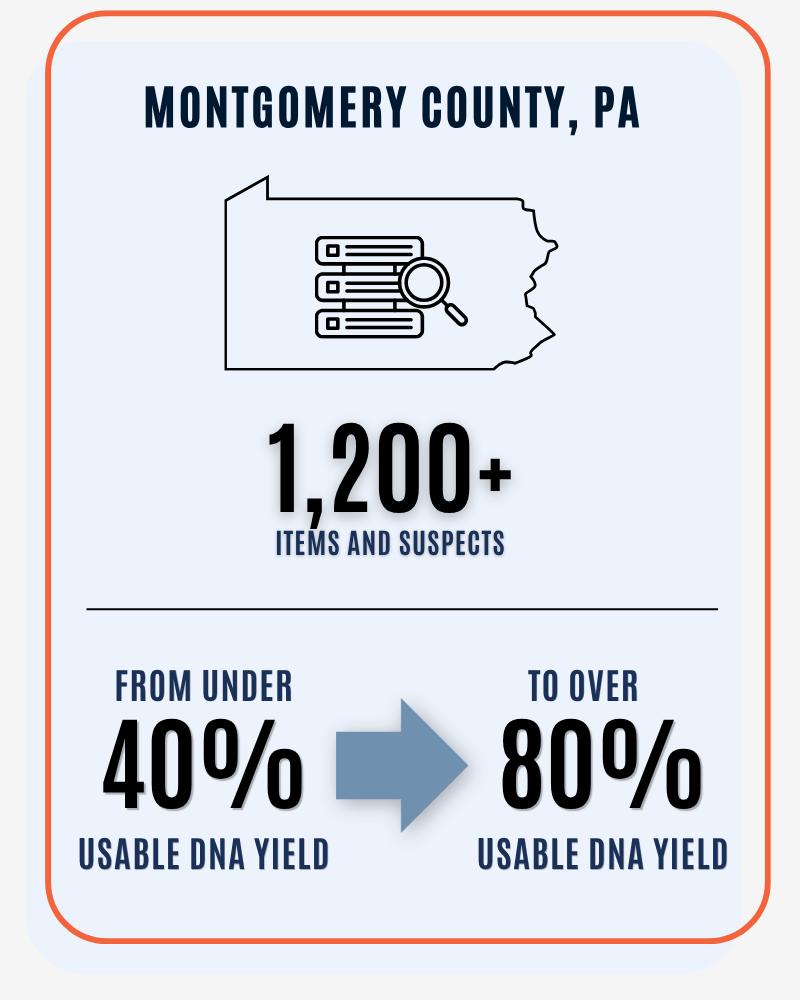
In a TA-ID deployment in Montgomery County, Pennsylvania involving more than 1,200 items and suspects, TrueAllele increased usable DNA yield from around 40% to over 80% — more than doubling the amount of usable DNA information recovered from existing evidence.
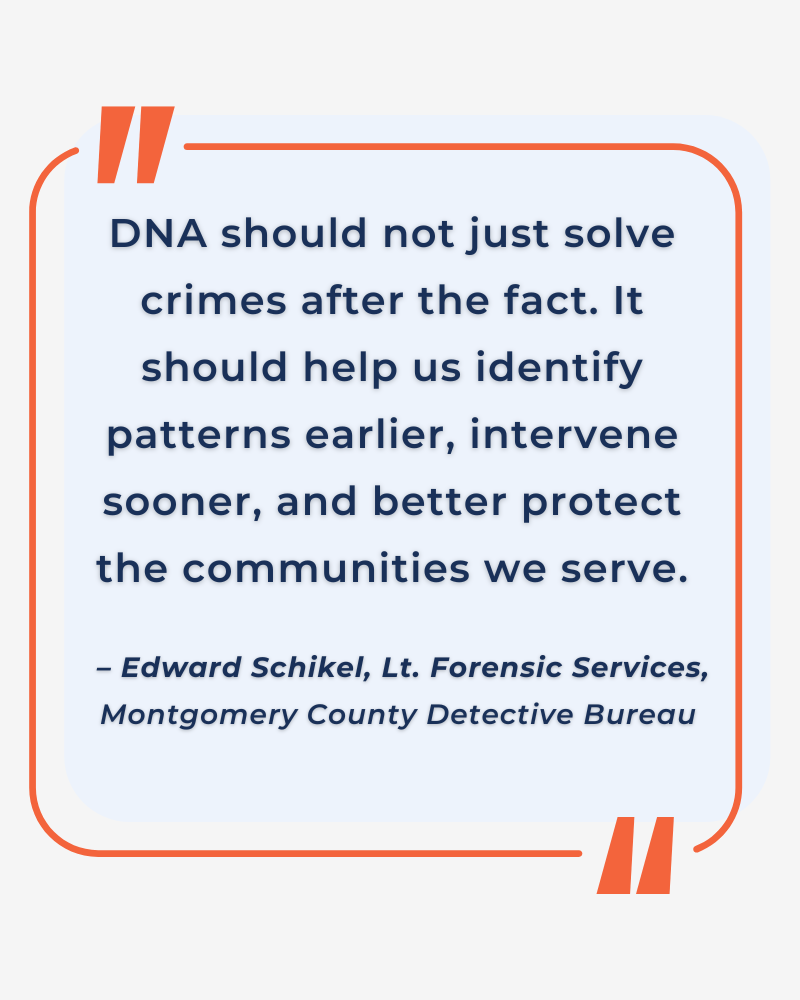
“For the first time, DNA was no longer just a piece of evidence tied to a single event. It began to function as intelligence. This initiative demonstrates the power of data-driven forensic strategy. Grateful for the partnership and the impact TA-ID is having on investigations.”
Lieutenant Edward Schikel
Montgomery County Detective Bureau - Forensic Services
Results vary by evidence type, data quality, local submission practices, and available reference profiles
What TA-ID Helps Agencies Find
TA-ID searches DNA evidence and reference profiles to help agencies identify:
Evidence-to-reference links that can point investigators toward a person worth follow-up.
Evidence-to-evidence DNA links that may connect separate incidents, crime scenes, or open cases.
DNA patterns that may show the same contributor appearing across multiple evidence items or incidents.
Short summaries showing what matched, which people or cases may be connected, and where follow-up may be worth prioritizing.
How it Works
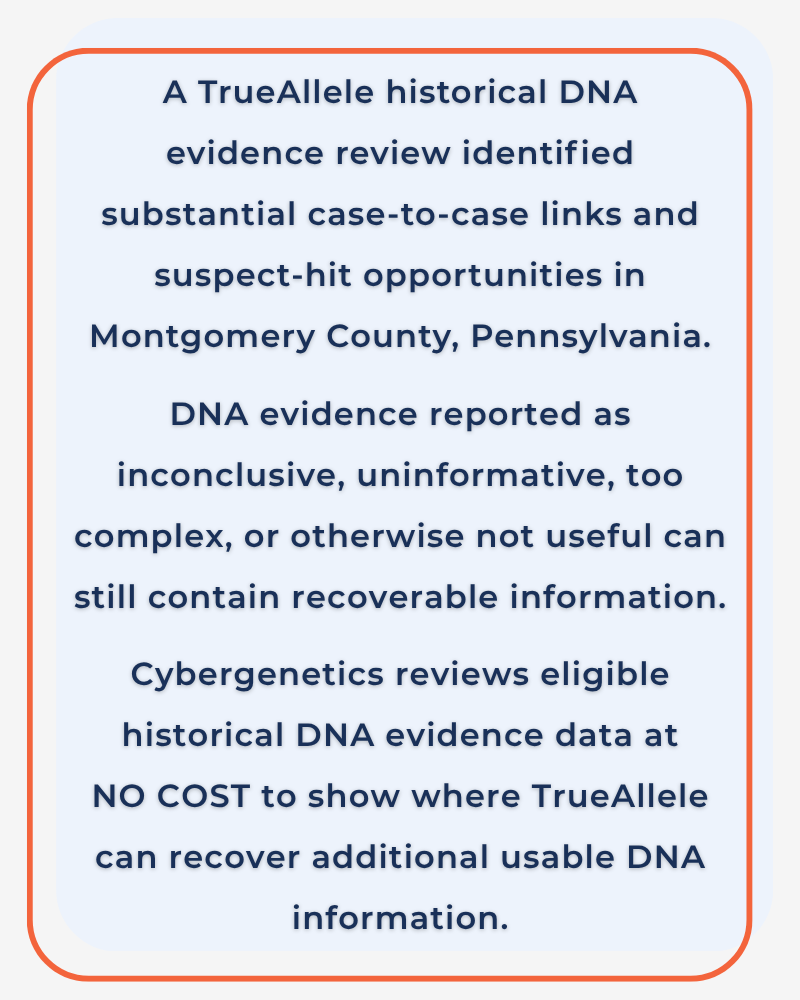
TA-ID works with DNA data your agency already generates. It adds another automated DNA linking layer across difficult, mixed, low-level, partial, and previously not-searchable results.
- 1. Discuss your data — We learn about your evidence data, case priorities, and goals.
- 2. If appropriate, provide eligible data — Existing DNA evidence data may be provided for review.
- 3. TA-ID searches for links between — suspect hits, case-to-case links, evidence-to-evidence connections, and repeat-contributor patterns.
- 4. Receive a review report — You receive a report showing what TA-ID found and possible next steps.
Review Report Contents
- Usable investigative DNA yield
- Suspect associations
- Case-to-case links
- Evidence-to-evidence connections
- Repeat-contributor patterns
- Examples of investigative follow-up opportunities
- Information useful for internal budget/procurement discussions
Case and Evidence Types
TA-ID is designed for volume crime: high-frequency investigations that drive daily workload and often involve repeat offenders involving multiple types of investigations and evidence.
- Vehicle break-ins
- Burglaries
- Thefts
- Robberies
- Firearm recoveries
- Property crime series
- Repeat-offender patterns
- No-suspect cases
- Cases with inconclusive or not-searchable DNA
- Steering wheels
- Gear shifts
- Door handles
- Windows and ledges
- Clothing
- Cigarette butts
- Firearms
- Other touched or handled evidence
Submission Form
TA-ID turns existing DNA results into case intelligence investigators can use to move leads forward.
Request a discussion. Cybergenetics will help determine whether a TA-ID demo or No-Cost DNA Evidence Review is the right next step.
See What TA-ID Could Find in Your DNA Data
- Evidence-to-evidence link summaries
- Evidence-to-reference association summaries
- Case-connection information and repeat-contributor patterns
- Link counts by type and historical DNA yield comparison
- Prioritized follow-up opportunities
- Suspect lead summaries
What Happens After You Reach Out?
- 1. Initial discussion — We learn about your current DNA workflow, crime priorities, and data availability.
- 2. Demo or review recommendation — We help determine whether a TA-ID demonstration or No-Cost DNA Evidence Review makes the most sense.
- 3. Data transfer, if appropriate — If you proceed with a review, Cybergenetics coordinates transfer of eligible evidence and reference data.
- 4. Results review — Your team receives link counts, suspect associations, case-to-case connections, and a practical discussion of investigative next steps.
Frequently Asked Questions
No. TA-ID works with DNA data generated through existing workflows. Your current evidence collection, state laboratory, private laboratory, and Rapid processes can continue.
No. TA-ID is a separate investigative lead-generation database. It is designed to help agencies search existing evidence and reference DNA data for local investigative leads and case connections. It does not replace state or national DNA database workflows.
TA-ID is designed for investigative lead generation. When a case needs formal interpretation for court, Cybergenetics can provide a TrueAllele case report.
Yes, one case example is PA v Zaire Rasom-Nelson, which involved a match first identified using the TA-ID process.